For decades, subscribing to cable television was considered an unavoidable household utility bill across the United States. If you wanted to watch live NFL football, follow breaking news on CNN or Fox News, or let your children watch Disney Channel, you were forced to sign multi-year contracts with regional cable monopolies like Comcast Xfinity, Charter Spectrum, Cox Communications, or Optimum.
Today, the television landscape has fundamentally shifted. Millions of American families are re-evaluating their household budgets and asking a simple question: In the ongoing debate of IPTV vs cable, is traditional television still worth the staggering monthly expense when modern streaming delivers superior quality?
In this comprehensive guide, we compare IPTV vs cable TV across costs, hidden fees, channel variety, hardware requirements, and streaming video quality to help you make an informed cord-cutting decision.
1. The Real Cost of Cable: Exposing Hidden Fees
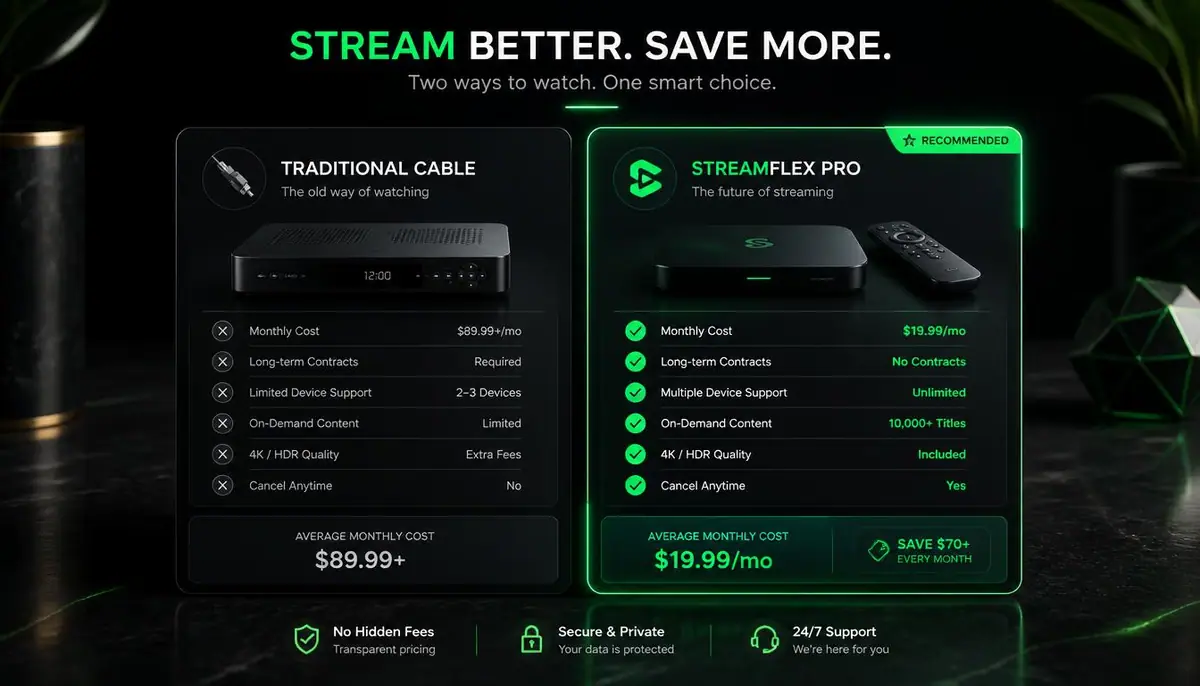
When cable companies advertise a "$79.99 monthly bundle," the promotional number on the billboard bears almost no resemblance to your final monthly credit card charge. Once promotional discounts expire after 12 months, legacy cable bills routinely balloon to $160, $200, or even $250 every month.
The primary culprit behind skyrocketing cable costs is a barrage of mandatory administrative fees that cannot be removed: - Broadcast TV Fee ($25 to $35/month): Cable companies charge you an extra surcharge simply to retransmit local channels like CBS, NBC, ABC, and FOX—stations that transmit over the public airwaves for free. - Regional Sports Network (RSN) Fee ($15 to $22/month): Even if you never watch a single baseball or basketball game, cable providers force subscribers to subsidize regional sports broadcast contracts. - Set-Top Box and DVR Rental Fees ($10 to $15/box/month): If your home has a living room TV, a master bedroom TV, and a basement TV, you pay upwards of $40 every month just to rent plastic hardware that the cable company already amortized years ago. - Regulatory Franchise Fees and Taxes ($12 to $18/month): Local municipality taxes compounded on top of inflated base rates.
When you total these expenses, the average American household spends between $1,900 and $2,700 every year just to watch basic television.
2. The IPTV vs Cable Pricing Revolution & Savings
Internet Protocol Television eliminates the bloated legacy infrastructure of coaxial wiring, physical utility trucks, and proprietary hardware leases. By transmitting video data directly over high-speed fiber and broadband connections, operational overhead plummets—and those massive savings are passed directly to viewers.
With a premier provider like IPTVSubs8K, pricing is completely transparent: - 1 Month: $13 (zero contract, cancel anytime) - 3 Months: $19 (under $6.50 per month) - 6 Months: $29 (under $5.00 per month) - 12 Months (Best Value): $49 for an entire year (just $4.08 per month)
There are zero broadcast TV surcharges, zero regional sports fees, and zero equipment rental costs. Over a three-year period, transitioning from cable to IPTV saves an average American household over $5,000 in disposable income. You can review all tier details on our pricing and plans directory.
3. Channel Catalog and Content Selection
Beyond astronomical savings, analyzing IPTV vs cable channel diversity reveals a massive advantage for streaming viewers.
Legacy Cable Television Limitations A standard digital cable subscription in the US typically tops out between 150 and 220 channels. If you want specialized sports packages like NFL RedZone, out-of-market games, international soccer leagues (English Premier League, UEFA Champions League), or foreign-language broadcasting, cable companies force you into expensive add-on tiers or separate streaming app subscriptions.
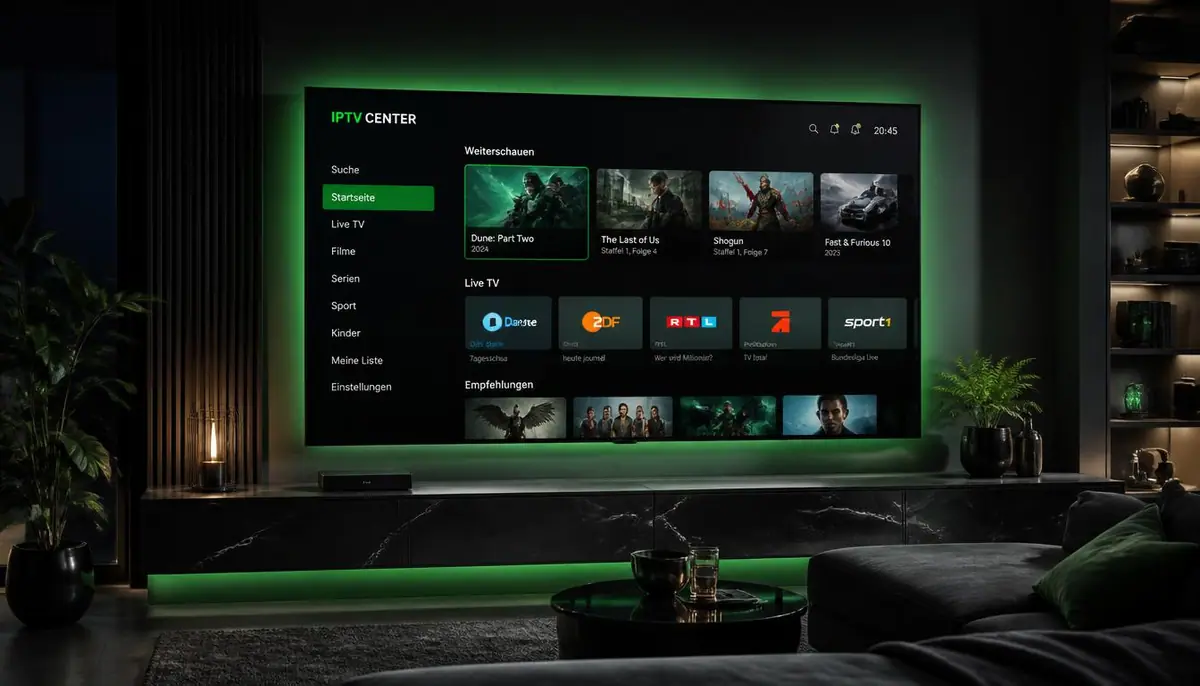
IPTV vs Cable Channel Catalog Differences Because IPTV utilizes efficient IP multiplexing, server capacity is virtually limitless. Subscribers receive instant access to: - +40,000 Live Television Channels: Every local US affiliate across all 50 states, 24/7 news networks, premium cinema channels (HBO, Showtime, Cinemax, Starz), and full global broadcasting from the UK, Canada, Europe, Latin America, and Asia. - All Major League Sports Packages: NFL Sunday coverage, NBA League Pass, NHL Center Ice, MLB Extra Innings, and pay-per-view events included without separate PPV charges. - +200,000 Video On-Demand (VOD) Titles: Complete box-set series and the newest cinematic movie releases updated weekly.
You can inspect the full variety of stations in our comprehensive channels list breakdown.
4. Hardware Independence: Watch Anywhere, on Any Screen
One of the most irritating aspects of cable TV is physical lock-in. Your cable box is tethered to a physical wall coax outlet. If you travel on vacation, want to watch the big game in your garage workshop, or wish to catch news highlights on your lunch break at work, your cable box is useless.
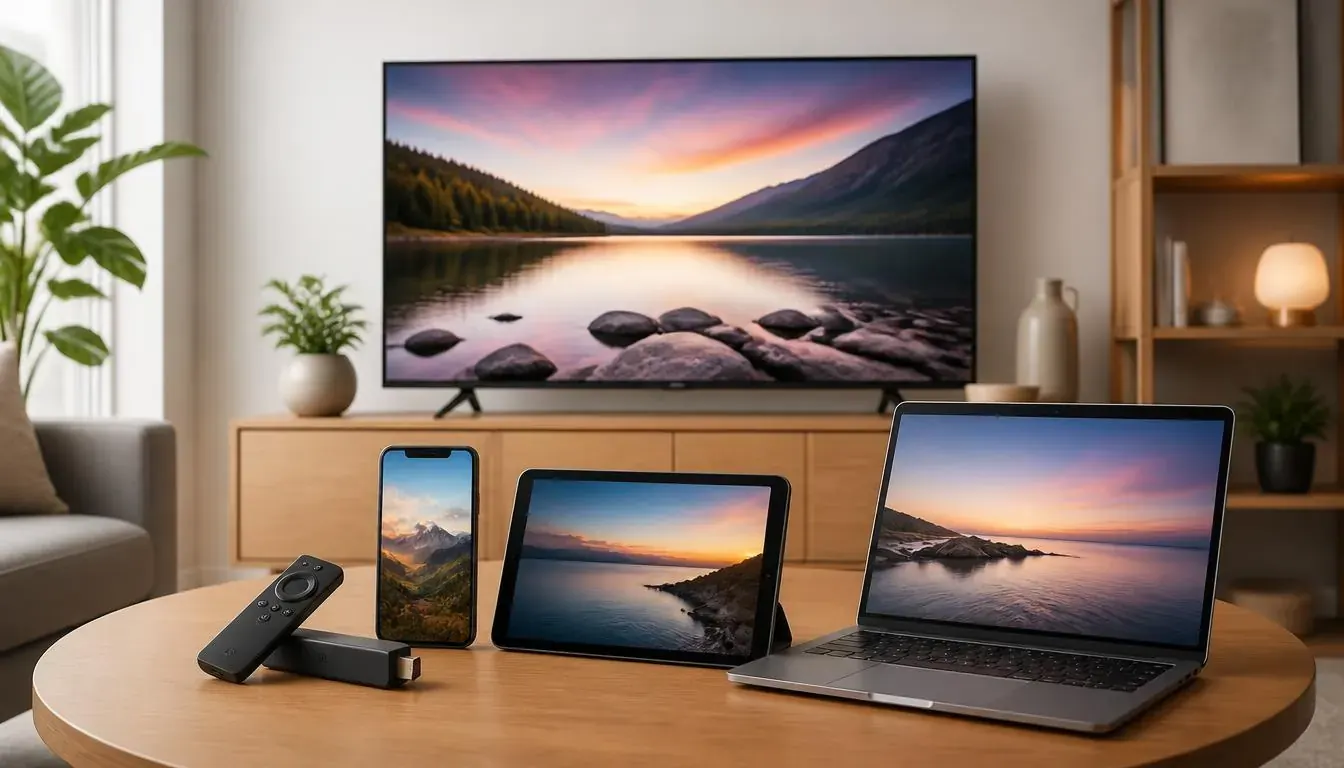
IPTV is fully cloud-native and platform-agnostic. You can stream seamlessly across: - Streaming Sticks & TV Boxes: Amazon Fire TV Stick 4K Max, Nvidia Shield Pro, Chromecast with Google TV, and Apple TV 4K. - Smart TVs: Native apps on Samsung Tizen and LG webOS. - Mobile Devices: iPhone, iPad, and Android smartphones. - Computers: Windows 10/11 laptops and macOS Apple Silicon systems via VLC or IINA.
Check out our 3-minute Firestick setup walkthrough to see how simple it is to turn any HDMI screen into a complete entertainment center.
5. Video Quality and Internet Speed Requirements
A frequent concern among prospective cord-cutters is whether their home internet connection is fast enough to handle IPTV streaming.
Legacy cable typically delivers MPEG-2 or compressed 720p/1080i signals over aging copper coaxial lines, which often look muddy on modern 4K OLED televisions. Modern IPTV leverages advanced HEVC (H.265) and 60FPS video compression, producing razor-sharp 1080p, 4K Ultra HD, and select 8K broadcasts with vibrant HDR color grading.
To enjoy buffer-free streaming, you do not need gigabit fiber: - HD Streams (1080p): Requires 10 to 15 Mbps download speed. - 4K Ultra HD Streams: Requires 25 to 35 Mbps download speed. - 8K Feeds: Requires 50 Mbps stable broadband.
With the average US home broadband speed currently exceeding 150 Mbps according to FCC data, virtually every American household already possesses more than enough internet speed to replace cable entirely.
6. How to Make the Switch Without Risk
Making an informed IPTV vs cable decision does not have to be a stressful gamble. The smartest approach is to run IPTV side-by-side with your existing service for a weekend:
- Claim an instant 24-hour IPTV free trial with no credit card required.
- Install a media player like TiviMate or IPTV Smarters on your Firestick or smart TV.
- Test your favorite sports broadcasts, prime-time drama series, and local evening news.
- Once you witness the pristine picture quality and seamless channel navigation firsthand, call your cable company, return their leased converter boxes, and enjoy thousands of dollars in annual savings.